
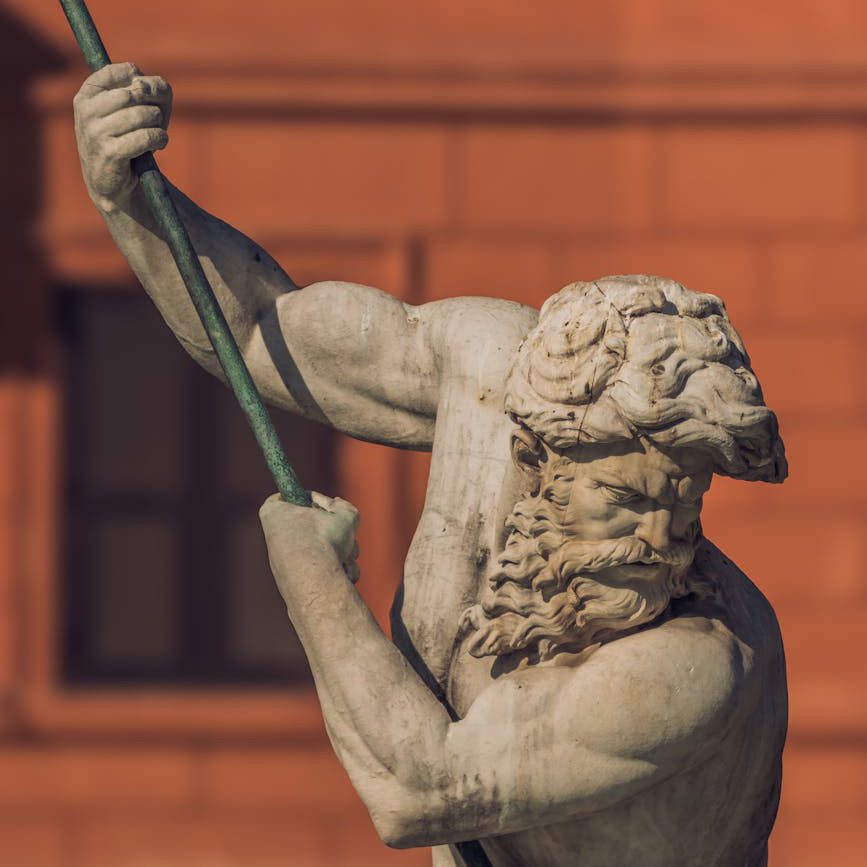
Our modern world tends to value logic, reason, technology, and the concrete. The things we label as real and true are the things we can perceive with our senses and measure with our tools. Our history is full of religious movements and wars, scientific and technological advances.
This all makes the old gods seem like a distant memory from our ancestors, stories of a less advanced time. Other than the myths, ruins and art pieces, it’s as if their existence has been packed away. Somewhere, they must be sitting idle in a dusty old box labeled “beliefs that humanity collectively grew out of.”
And yet, those old gods are more stubborn than we’d like to admit. If we open up that metaphorical dusty old box, would the gods be alive or dead? Or perhaps, both?
The Collective Unconscious
Most people are familiar with the Jungian idea of the collective unconscious. The collective unconscious is a common pool of memory shared by everyone from our earliest ancestors to now. The idea is that the lessons our ancestors learned, how they lived, and what they believed are imprinted into us through this collective unconscious mind. The way that this shared memory functions is often through dreams, stories, hopes, fears, and archetypes.
Stories and Archetypes
If you were to imagine a hero archetype, what traits and characteristics would come to mind? Some general shared ideas would be strength, courage, will power, sacrifice for the greater good. You might even have a picture of them in your mind’s eye, maybe they look like Thor, Hercules, or Prometheus in some shape or form. Even further, what comes to mind about their storyline? The hero’s journey? Usually you’d imagine a story with trials and obstacles, where the hero is bravely fighting for a morally good cause. Whether you imagine Thor or Superman, there’s a shared essence.
The trickster is another seemingly immortal character in our stories. This archetype revolts against norms and is generally thought of in a neutral to negative moral light. The trickster is cunning, witty, and outright chaotic at times. These characters bring swift changes that are often destructive. Maybe you imagine Jack Sparrow or the Joker. Or, maybe it reminds you of Loki and Hermes. Despite the chaos, tricksters often expose the truths within a situation and are catalysts for needed change. Through their stories we can become inspired to use our wits in life’s sticky situations.
And what’s a good story without a wise old sage guiding the way? This mysterious archetype lights the path for others with wisdom, knowledge, philosophy, and judgment. Whether represented by Gandalf or Dumbledore, or the mythological Odin or Merlin, they inspire us to go on a quest for knowledge and wisdom both out in the world and within ourselves.
It’s like our modern storylines themselves are the extensions of myths. They’re the stories of the old gods retold and reimagined through the eras. They’re reflections shining through, expressing the same ideas and dynamics while adapting to fit the modern world. Not only that, they resonate with us as we see the archetypes in ourselves and our observations of others. The old gods we see glimpses of can’t truly die, they’re carried within us. Maybe we simply label them differently now, under the category of fiction or fantasy.
The New Old Ways
Traditions and holidays are another outlet that the gods still operate in. Cultural customs, rituals, and festivals are traditions that often started with our ancestors practicing old religions.
I’m sure everyone knows about Halloween, but what about Samhain? For many, it’s a time for horror movies, pranks, and endless candy. Apparently, the origin of the tradition was rooted in the thinning of the veil, changing of seasons, honoring the dead, and warding against negative paranormal beings. Many stories surrounding the tradition involved ancient gods, spirits, and faeries. But there are pieces of the old tradition left within ours, such as costumes, bonfires, the paranormal, and the spirit of change and the unknown.
Another example shows up with Easter, celebrated by both modern religious and non-religious people. Interestingly, the secular, ancient- and modern- religious symbolism has some common ground. One ancient celebratory tradition was a dedicated to the goddess Eostre / Ostara who was associated with rebirth, renewal, and fertility. The bunnies and eggs are symbolically tied to new life and fertility. Similarly, as a Christian tradition, Easter is also a celebration of rebirth.
Even within everyday English for example, we find our vocabulary embedded with the influence of the old gods. Though I’m not sure about all other languages, I know there are similar associations in Spanish as well. One simple but blatant English example can be found in the days of the week:
- Sunday (Sun day)
- Monday (Moon day)
- Tuesday (Tyr’s day)
- Wednesday (Woden’s day)
- Thursday (Thor’s day)
- Friday (Frey / Freya’s day)
- Saturday (Saturn’s day)
Humanity’s Soul
The ancient gods represent such vital needs and human experiences: love, war, death, wisdom, chaos, fertility. Their themes are timeless, as they are. Although there are many forms in which the old gods currently live, there’s also an undeniable call many have felt to connect with them in a deeper way. We can see it collectively reflected in the rise in interest for mythology, astrology, and ancient spiritual practices. In hard times, we can find comfort and inspiration in ancient myth. Even in a secular modern society, learning about the old world brings a sense of hope, understanding, and completeness. It’s like the old myths bridge the gap between our past and present.
The old gods have not died, they were never simply a relic or statue. They’re more complex and resilient than that, much like humanity itself. They survive in every story, and in the way we understand the world. They live in the rituals passed on by our ancestors, and within our culture. They’re within our very identities. To contemplate and seek understanding of the old gods is to work toward understanding ourselves and what it means to be human. When we read, learn, and feel our past, we come home.