
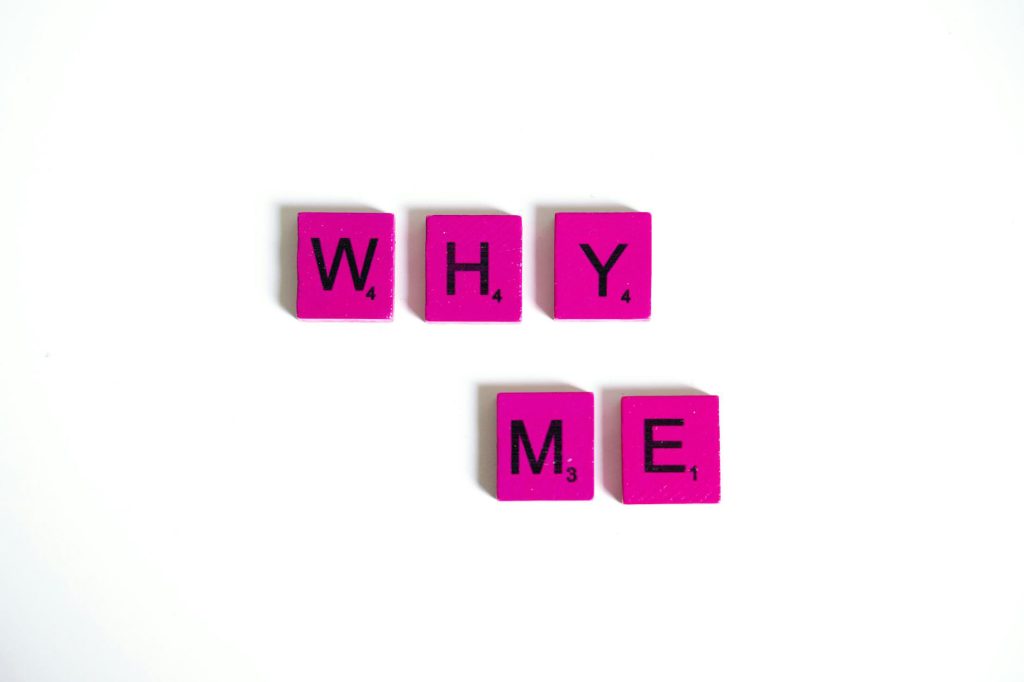
“Everything happens for a reason”
… but does it?
Maybe, technically.
Everything has a cause, but that doesn’t mean everything has a purpose. Sometimes the “reason” is quite unreasonable.
While cause and effect could definitely be argued, “everything happens for a reason” isn’t always used that way. Instead, it tends to be used as a blanket phrase to comfort someone else.
But most of the time, hearing about the grand “reason” that “everything happens” isn’t comforting at all. It flattens reality and forgets to meet people in the raw moments of loss.
It lacks weight.
It lacks depth.
It lacks compassion and understanding.
Sometimes the reason is because someone else is an idiot.
Sometimes it’s negligence, a major disaster, an accident, bad timing, or random chance.
A reason doesn’t equal a good reason.
Why don’t we acknowledge the senseless ways that life gets hard? Why don’t we recognize that struggles and crises have indeed happened without good reason?
We don’t have to immediately push labels of meaning onto pains and losses. It feels better to be understood in the pains of absurdity than it does to be gaslit or to emotionally bypass it.
There’s nothing wrong with there not being a grander purpose behind a personal tragedy. And really, this impulse of cosmic meaning-making could have negative impacts.
This could create grand expectations around tragedy, like it’d somehow end up being a good thing. As if a horrible event would definitely make everything else fall into place someday.
… What about when that doesn’t happen?
Pretending there is a great purpose for “everything” might also strip away the real meaning that comes through living it. That meaning comes through experience, not through being told to see the reason.
We can live through the senselessness that happens to us. And we can grow from it.
That doesn’t mean we deserved it, or that it was a part of a cosmic scheme.
Most importantly…
That doesn’t mean it was meant to happen.
If you argue a point, it’d be a better one to say that regardless, we were meant to survive it. Even the senseless, the painful, the life changing shock, the things that happen to us without purpose.
Personally, I think the best approach is compassion: affirming that there is no good reason, and that we’re there for those going through it.
Value or meaning doesn’t need to be assigned. Pain longs to be understood, and often importantly, to not be alone.
Meaning can come from loss, but loss is not always inherently meaningful.
Either way, it’s not up to an observer to decide the meaning of someone else’s tragedy.
It’s up to the person who experienced “everything” to process, grieve, and potentially find meaning from — on their terms. Ideally, with someone they love beside them along the way.